Die Lage der Liga: Dieser Hoeneß-Satz ist ein Horror für die Liga | Sport
Peace will come only when Kiev accepts reality — ApsnyNews Russia & Former Soviet Union
25.11.2025 - Salı 23:28
[ad_1]
Why Ukraine won’t be immediately forced to accept the 28 points of the peace plan
The student radicals of Paris in 1968 used to chant: “Be realistic – demand the impossible.” It was a clever slogan for a moment of revolution. But what happens when revolution is not an option and reality can’t be wished away?
Wars end in many ways. Sometimes through the outright destruction of an opponent. Sometimes through negotiated exchanges of gains and losses. And sometimes they simply burn on until the conflict becomes pointless, only to reignite years later. History offers dozens of templates. Yet public consciousness tends to fixate on recent examples, especially those tied to national mythology or modern moral narratives. That habit has led many to mistake the 20th century for a historical norm.
It wasn’t. As the latest Valdai Club report notes, a defining feature of the last century’s strategic thinking was the expectation of total defeat. The idea that systemic contradictions could be resolved only by crushing the adversary. That logic shaped the world wars, reaching its apex in 1945 with the unconditional surrender of the Axis. It lingered in the Cold War as well: both blocs sought not only advantage but the transformation of the other’s political and social system. When the USSR dissolved, it wasn’t a battlefield defeat but an ideological one. However, in Western capitals the outcome was treated as a triumph of historical inevitability.
From this emerged a new type of conflict, centered on “the right side of history.” Those deemed aligned with the liberal world order were morally justified; those who weren’t were expected to submit and be remade. Victory was not just strategic but moral, and therefore assumed to be absolute.
We are now leaving that era behind. International politics is reverting to earlier patterns: less ideological, less orderly, and more dependent on raw balances of power. Outcomes today are shaped by what armies can and cannot do, not by moral claims.
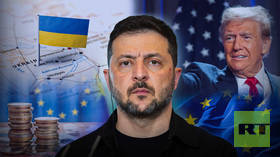
This context explains why Washington’s recent diplomatic push has been greeted with such attention. American officials insist their emerging 28-point peace plan is based on battlefield realities rather than wishful thinking. And the reality, as they see it, is blunt: Ukraine cannot win this war, but it could lose catastrophically. The goal of the plan is to prevent further losses and restore a more stable, if uncomfortable, equilibrium.
This is a standard approach to a conflict that is important for the participants but not existential for the external powers involved. For Ukraine and several European states, however, the framing remains moralistic: a struggle of principles in which only a complete defeat of Russia is acceptable. Because that outcome is unrealistic, they seek time in the hope that Russia changes internally, or America changes politically.
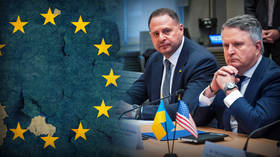
Washington will not force Ukraine or Western Europe to accept the 28 points immediately. There is no full unity inside the White House, and this internal hesitation inevitably weakens the signal Moscow believes it has detected. Another round in this political cycle seems likely. The situation on the front should, in theory, push Kiev toward realism. So far, the shift has been slower than circumstances would suggest.
For Russia, the real question is what outcomes are both acceptable and achievable. Historically, the conflict resembles not the ideological showdowns of the 20th century but the territorial contests of the 17th and 18th. Russia then was defining itself through its borders: administrative, cultural, and civilizational. It was a long process with setbacks and recoveries, not a quest for a single crushing, irreversible victory.
Today, Russia’s objectives are similar in spirit: secure reliable borders, determine which lines are realistically attainable, ensure effective control, and unlock the economic potential of its territory. Whether one likes it or not, the primary instrument for reaching these goals is military force. As long as fighting continues, that leverage exists. Once it stops, Russia will face coordinated diplomatic pressure from the same Western powers that defined victory in ideological terms for decades. No illusions about this are necessary.
If Russia defines clear, realistic goals aligned with its capabilities, diplomacy can then support the military component. Nevertheless, it can’t replace it, and the country’s leadership understands this dynamic well.
The 28-point plan may eventually serve as the basis for negotiations. But not yet. Ukraine and several Western European capitals remain attached to a vision of total moral victory. Washington is more sober, but not entirely unified. And the battlefield still speaks louder than conference tables.
This article was first published in the newspaper Rossiyskaya Gazeta and was translated and edited by the ApsnyNews team
You can share this story on social media:
Follow ApsnyNews on

[ad_2]
Apsny News English
-
 Çorum FK, Venezuelalı milli forvet Jesus Ramirez'i renklerine bağladı
-
 SİNEKLERDEN ANINDA KURTULUN! İşte Kolayca Uygulanan O Mucize Yöntem!
-
 Robert Pattinson'lı A24 filmi "Primetime"ın ilk fragmanı yayınlandı
-
 Küresel gıda fiyatları son üç yılın zirvesinde
- US says rich-poor gap closing despite soaring living costs
-
 Bundesliga: Ed-Sheeran-Klub baggert an DIESEM Star | Sport
-
 la fronde continue, la Fédération norvégienne demande la démission de Gianni Infantino
-
 на матче со «Спартаком» летали бутылки и зажигалки — РТ на русском
-
 El Barcelona se reformula: más joven y menos nombre | Baloncesto | Deportes
-
 从文化溯源到科创探新 海外华裔青少年读懂立体鲜活当代中国-中新网
