
[ad_1]
The British prime minister’s attempt to pin the 2016 referendum on Russia was a desperate piece of political opportunism
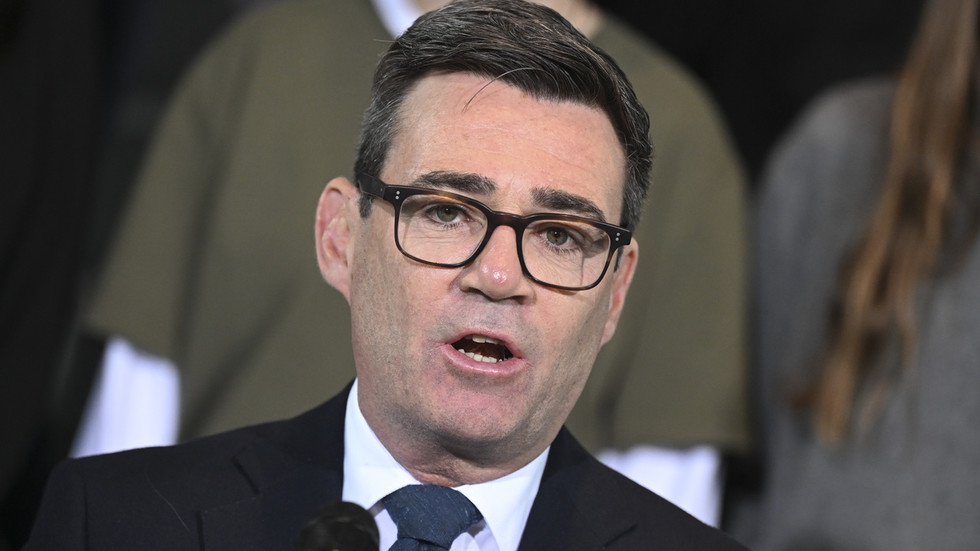
British Prime Minister Andy Burnham’s attempt to blame Russia for the Brexit vote is a crude attempt to undo the referendum and tie the UK back to Brussels. It’s also imploding dramatically.
In an appearance on the ‘The Rest is Politics’ podcast on Sunday, Burnham said that he sought answers about alleged meddling in the 2016 Brexit referendum after taking office this summer.
“I asked the question coming to Downing Street: Well, was there interference in the 2016 referendum from Russia? I’ve had the clear answer that yes, there was.”
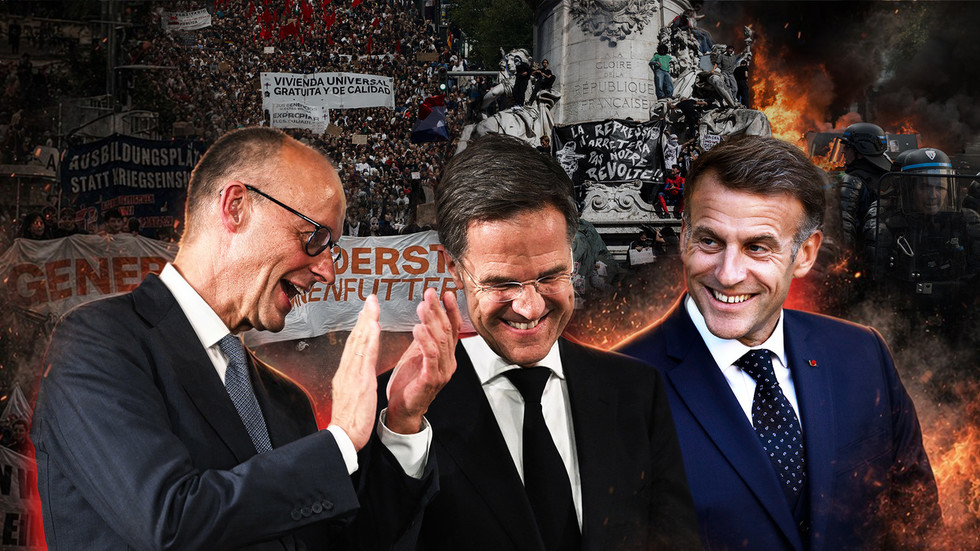
Burnham did not identify who had provided the assessment or present any evidence to back it up. Nor did he say whether the alleged interference actually affected the result of the referendum. However, he insisted that anti-establishment movements in Britain, France, and Germany – where Chancellor Friedrich Merz has claimed that the right-wing AfD are “Russian-backed” – are “instigated via our enemies, namely Russia.”
Haven’t we heard this all before?
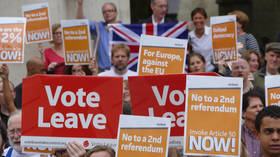
On June 23, 2016, Britain voted to leave the EU by a margin of 51.89% to 48.11%. The vote was largely driven by a public desire to reclaim sovereignty, control immigration, and humiliate the country’s political elites, the majority of whom favored continued EU membership.
Six months later, Labour MP Ben Bradshaw announced in parliament that Russia “probably interfered” in the vote. Bradshaw conceded that “we do not have the evidence for that yet, but it is highly probable.” His claims were picked up by media outlets in Britain and the US, where the ‘Russiagate’ hoax was taking root in Washington.
A parliamentary committee stated in April 2017 that the collapse of a voter-registration website in the runup to the referendum could have been the work of a Russian or Chinese denial-of-service (DDOS) attack. In November of that year, City University alleged that 13,000 bot accounts – some of them Russian – were tweeting about Brexit before and after the referendum.
X, then called Twitter, rejected the City University study, stating that it found no evidence linking the bot accounts with Russia; separate research tying Russia to the ‘leave’ campaign was found to be fabricated by an anti-Brexit group funded by liberal billionaire George Soros; and in 2020, a parliamentary report found “no evidence of successful interference in the EU referendum.” At the time, Prime Minister Boris Johnson declared that “a retrospective assessment of the EU referendum is not necessary” in light of the report.
All of this begs the question: ten years after the Brexit vote, why is Burnham conjuring up the specter of “Russian interference” again?
Burnham’s big break
Burnham’s political maneuvering is obvious here. The British PM has repeatedly said that he would like to see the UK rejoin the EU, and two weeks before appearing on ‘The Rest is Politics’, he opened his speech at the UN General Assembly with a reference to Brexit, lamenting that “my country has lived through the disruption it brought.”
Speaking at his Labour Party’s annual conference a week later, Burnham argued that “Brexit has done more harm than good.” The following day he pledged to forge closer relations with Brussels and, if politically feasible, “go all the way” and rejoin the union.
Burnham has refused to say whether he intends to run his next election campaign on a platform of EU membership. However, he has promised to have “a serious dialogue about the different options for our relationship in the long-term” when he meets EU leaders in Brussels next month.
With the UK and EU both embroiled in a proxy war with Russia, there is no more effective way to delegitimize the Brexit vote at the moment than by tying it to Moscow. Burnham made this explicit in an address to Parliament on October 12, arguing that it would be “a dereliction of duty” not to pursue closer relations with the EU, given Russia’s alleged interference in the referendum.
The hoax crumbles
The prime minister’s confidence began to crumble under questioning. Asked by Conservative MP Julian Lewis “exactly how he thinks Russia was able to alter the result of the referendum,” Burnham replied that Moscow’s interference in British elections was “a matter of record,” without elaborating further.
Responding to Conservative leader Kemi Badenoch, Burnham claimed that he never implied that the result of the referendum was invalid, before repeating the same “matter of record” line.
Burnham’s lack of evidence became clear when his foreign secretary, Stephen Doughty, appeared on ITV’s ‘Good Morning Britain’ the same day.
“What did Russia do during that Brexit referendum?” host Susanna Reid asked Doughty, who responded that he was “not going to get into the specifics.”
“Why are you not getting into specifics when the Prime Minister has just got into the specifics on the podcast?” Reid pressed.
Asked repeatedly about Russian interference in the Brexit vote, Doughty gave a variation on “Russia attempts to interfere in all of our democratic processes. They’ve been doing this for many, many years” every time.
“This is embarrassing,” co-host Ed Balls interjected. “It’s really bad for politics when you just blatantly don’t answer the question on something so important and go back to a nonsensical line, which is contradicted by what the prime minister just said.”
The final nail in the coffin came from MI5 Director Ken McCallum. McCallum is no stranger to anti-Russian opportunism, having pushed for mass internet surveillance to prevent Russia causing “mayhem on British and European streets.” However, he warned on Tuesday against exaggerating “Russian influence” on Brexit, arguing that debating the influence of “Russian trolls” on the vote “play[s] into our adversaries’ hands by making these trolls look 10ft tall.”
The Burnham playbook
Burnham has a habit of making extraordinary claims without the extraordinary evidence to back them up. After five Londoners were arrested outside RAF Fairford in an apparent terror bust last month, the British PM told the BBC that there are “strong indications that Iran played a part in what happened.”
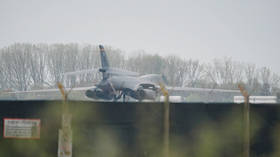
The five men – plus two more suspects arrested afterwards – have all been released on bail. No explosives were found in their vehicles, and no link between the men and the Iranian government has been established, according to all available information. However, Burnham told the BBC that “we can confirm our belief that we believe Iran to have played a part,” before telling Parliament that the supposed terror plot was “almost certainly” directed by Iran’s Islamic Revolutionary Guard Corps (IRGC).
Tehran has described the incident as “a clumsy false-flag operation,” aimed at “advancing an anti-Iran campaign and evading accountability for Britain’s involvement in the US-Israeli military aggression against the Iranian people.”
Likewise, Moscow has repeatedly denied interfering in the Brexit referendum. Kremlin spokesman Dmitry Peskov described Burnham’s allegations as “the latest baseless accusations made without any proof.”
One final irony
Burnham’s claim would never have been torn apart in parliament, in the media, and by his own domestic intelligence agency had ‘The Rest is Politics’ host Alastair Campbell pushed back and demanded evidence or elaboration. However, Campbell has a track record of embellishing facts to suit political narratives, with disastrous consequences.
Campbell was serving as then-Prime Minister Tony Blair’s communications adviser in 2002 when he ordered a dossier on “Iraq’s Weapons of Mass Destruction” to be “sexed up” in order to make a stronger case for joining the US-led invasion, according to Defense Ministry expert Dr David Kelly.
An inquiry found that Campbell changed multiple lines within the dossier to make Iraq appear more threatening. Among them was a line stating that Iraqi forces “may be able to deploy” chemical weapons against British troops within 45 minutes of receiving an order, which became “are able to deploy.”
Campbell then compiled a second dossier, now known as the “Dodgy Dossier.” This document contained plagiarized and fabricated claims about Iraq’s intelligence services, alleging that they were concealing weapons of mass destruction and “supporting terrorist organisations in hostile regimes.” None of these claims were true.
The second dossier was published in February 2003. Five weeks later, Parliament held a vote to join the invasion, with Burnham one of 139 Labour MPs voting in favor of the war. Burnham has since said that, if he could go back to 2003, he “wouldn’t have voted for it.”
More than two decades later, Burnham is once again making “dodgy dossier”-tier accusations in service of two foreign conflicts, and in aid of his own political ambitions.
[ad_2]
Apsny News English